Select a date, location, or topic to explore the data interactively:
The 2014–2015 Ebola outbreak in West Africa was not only a health crisis—it was also a crisis of trust, survival, and unmet needs. International response strategies, designed from earlier smaller outbreaks, often clashed with local realities in Sierra Leone. Families hid the sick, burials were resisted, and communities distrusted authorities.
What changed the course of the epidemic wasn’t just medical intervention, but listening to communities. Nearly 12,000 community visits were carried out by local mobilizers under the Social Mobilization Action Consortium (SMAC). Instead of broadcasting top-down rules, mobilizers created dialogues, documenting what people feared, what they lacked, and how they wanted to act.
In our paper published in The Lancet Planetary Health, we analyzed this unique dataset of community feedback to understand how unmet needs shaped behaviors during the epidemic.
Needs and Behaviors
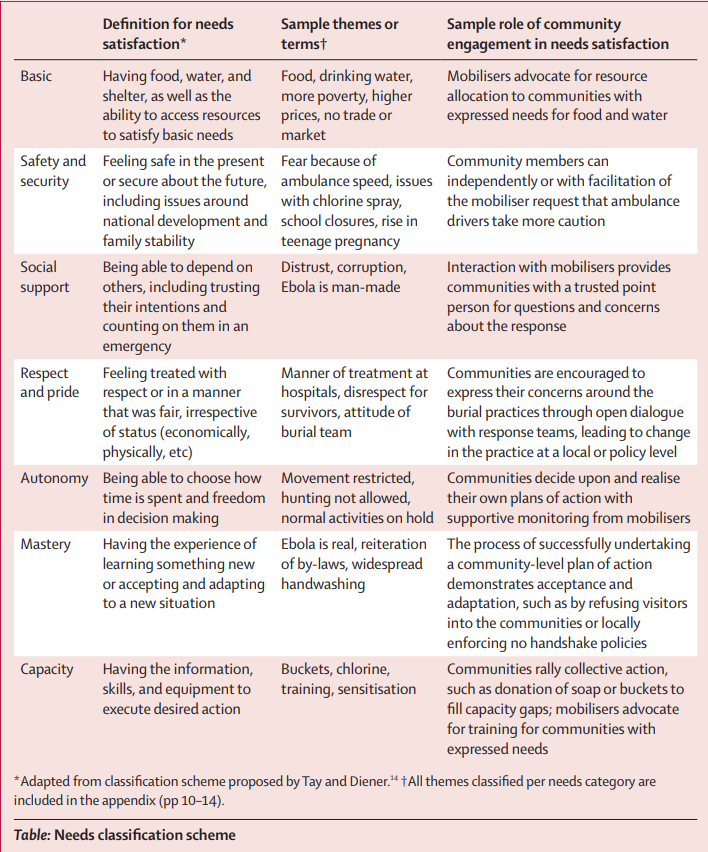
We categorized community concerns into a framework of human needs:
- Basic needs: food, water, shelter
- Safety and security: fear of ambulances, chlorine spraying, teenage pregnancy, school closures
- Social support: trust and cooperation within the community
- Respect and pride: fairness, dignity, treatment of survivors
- Autonomy: freedom to decide, ability to act
- Capacity: tools, training, information to respond
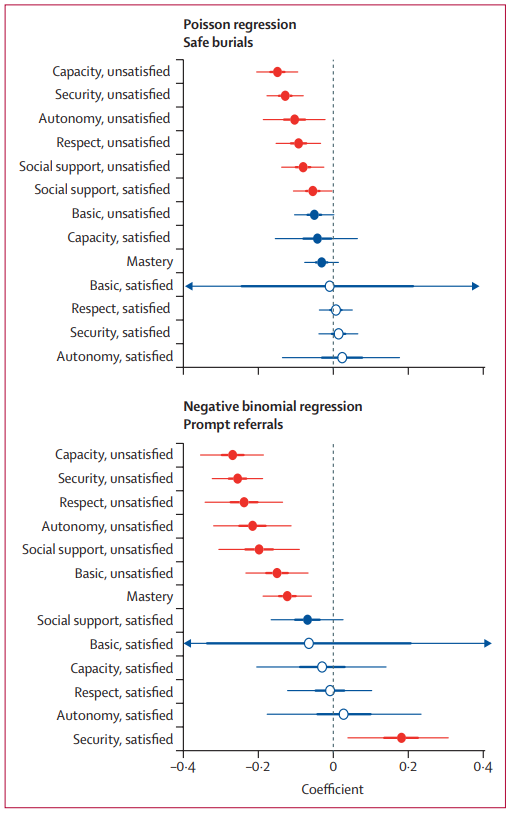
What emerged was clear: unsatisfied needs led to lower adoption of life-saving practices.
- Communities lacking capacity (like buckets, chlorine, training) reported 24% fewer safe burials and 34% fewer referrals to treatment within 24h.
- Unsatisfied security needs were tied to fewer safe burials and referrals.
- Even unmet basic needs like food shortages reduced treatment referrals.
By contrast, when communities reported satisfaction of needs—through autonomy, respect, or collective action—safe behaviors became more common.
Engagement That Works
A crucial difference was observed between triggering visits (the first mobilizer meetings) and follow-up visits:
- Triggering visits often surfaced frustrations and unmet needs.
- Follow-up visits were associated with more satisfied needs and significantly more safe burials and treatment referrals.
This shows the value of locally owned solutions. Communities didn’t just comply—they designed their own action plans, monitored progress, and adapted strategies. Mobilizers acted as connectors, not enforcers.
This aligns with self-determination theory: people are more motivated to change when they feel ownership, respect, and collective agency.
Maps and Patterns
Our analysis revealed strong spatial and temporal patterns in needs. For example:
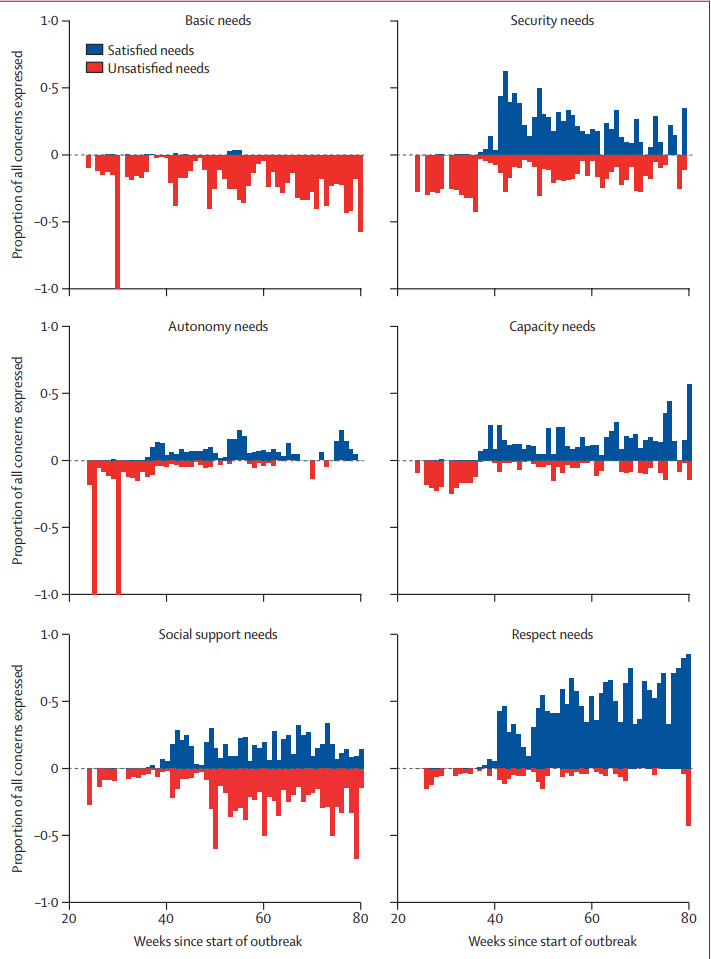
- Unsatisfied autonomy and capacity peaked early in the outbreak.
- Basic needs (like food and water) were consistently expressed throughout.
- Satisfied needs emerged later, after resources and follow-ups were established.
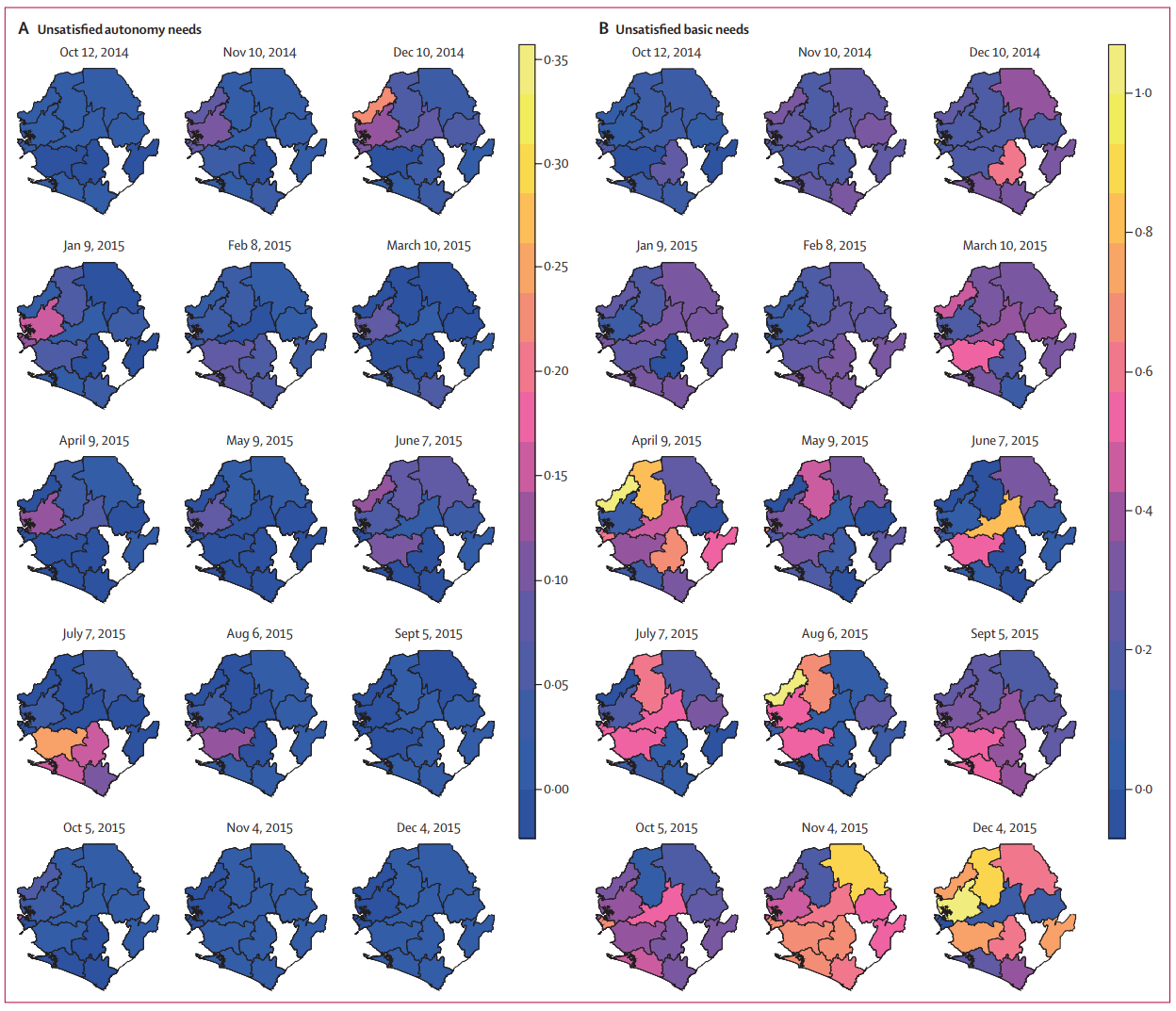
Urban areas like Freetown showed more satisfied needs than rural regions, reflecting inequalities in access to resources and support.
Lessons for Future Outbreaks
The key lessons from Sierra Leone’s Ebola crisis are:
- Unmet needs undermine response – food insecurity, fear, and lack of respect reduce adoption of safe behaviors.
- Community ownership matters – follow-up visits and local action plans were associated with greater behavior change.
- Real-time feedback is possible – our machine learning approach to classify thousands of community reports shows that monitoring needs can guide rapid response.
Future responses should treat communities as equal partners. Listening to concerns and enabling local solutions is not a “soft” addition to outbreak response—it is central to stopping transmission and building resilience.
This work demonstrates that outbreaks are not only biological events but also deeply social ones. By paying attention to unmet needs, we can design responses that not only save lives but also strengthen trust, dignity, and collective capacity.